
Mental Health
Page Navigation
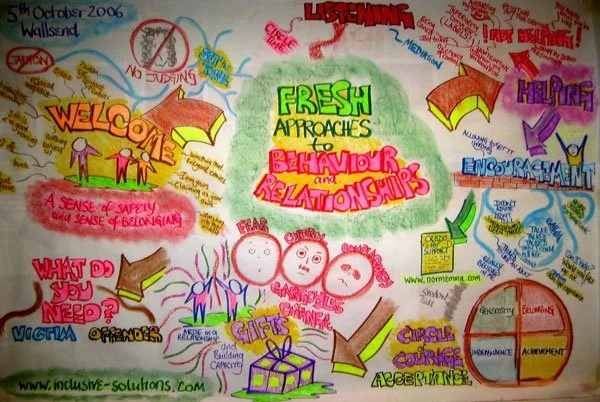
Keys to Mental Health & Relationships
The First Key: Welcome and Listening
Lets get the welcome right and then lets really listen! Safety, belonging and security are everything!!
Create a culture of hope
Creating a culture of hope is very important. The culture of hope is the warm and safe environment we all need to feel well and to be able to express and develop our personal qualities and dreams.
Helping Others: Unconditional Support & Warm Engagement
Unconditional Help
Helping someone feel unconditionally loved begins with offering unconditional help. This means supporting a person with what they find difficult — practical tasks or emotional situations — regardless of their current behaviour or ability to do it alone.
Many people struggle to ask for emotional help, especially if their feelings have been dismissed in the past. In Gentle Teaching, we often begin by offering generous practical support, even when a person could technically complete the task themselves. This builds trust and teaches them they can rely on us when emotions become overwhelming.
What Makes Help Effective
Two elements matter most:
1. Unconditional Support
Our help does not depend on how the person behaves. Even if they are not listening, or even if they are harming themselves or others, our warm regard remains. This doesn’t mean we approve of unsafe behaviour — only that our caring relationship stays steady.
2. Warm Engagement
We help because we genuinely care, not simply because it is our job. We express warmth, joy, and connection while helping so the person feels our support.
This is “help-plus”: help plus warm engagement.
Why Helping with Simple Tasks Matters
Offering help with tasks a person could do independently isn’t spoiling them — it teaches safety, trust, and belonging. Once someone feels securely connected with others, they naturally begin to act independently when they have the skills and motivation.
Human beings grow best when they feel part of a safe, loving community.
A Gentle Teaching Example
If you work with plans or goals, you can frame help as a relational tool:
Perspective: The person feels safe, valued, and loved.
Goal: The person experiences unconditional, warmly engaged help.
Action: We support them getting dressed in the morning, expressing joy and warmth as we help.
Here, dressing is not the goal — feeling safe and loved is.
The Power of Listening
Research suggests that up to 90% of behaviour problems stem from children wanting adults to listen. One study found that the most common request among suicidal teenagers was simply for adults to listen.
Being heard reduces distress; feeling ignored is painful at any age. People often value being understood even more than getting what they asked for.
The Second Key: Our Learning and Their Learning
Understanding How Children Learn
We now know more than ever about individual learning styles, preferences, and the accommodations young people need to thrive.
Children with autism, in particular, challenge traditional approaches to teaching and behaviour management. They show us the importance of working with their interests instead of treating these as obsessions or tools for reward and consequence.
Learning That Works
As educator Paul Ginnis emphasised, meaningful learning happens when pupils can:
Work things out for themselves
Experience dramatic, unusual, and multi-sensory teaching
Learn in an emotionally and physically safe environment
Have genuine control over their learning
Make choices that lead to true independence
These principles are especially powerful for pupils with significant emotional needs.
Ginnis’ resources — A Guide to Student-Centred Learning, The Student-Centred School, and The Teachers’ Toolkit — remain excellent tools for developing engaging, student-centred practice. Check out these student friendly resources for English: lesson plans, schemes of work and resources
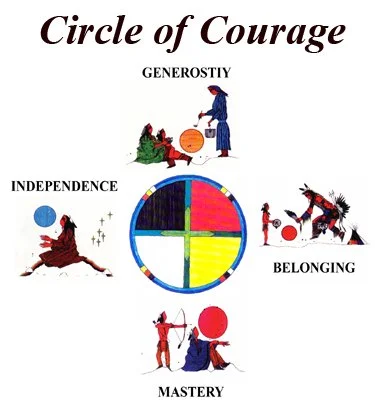
The Circle of Courage
The Circle of Courage, inspired by Native American teachings and described in Reclaiming Youth at Risk (Brendtro, Brokenleg & Van Bockern, 1990), is a model that helps us understand young people’s behaviour through four core human needs:
Belonging – Feeling connected, accepted, and valued. Many young people with emotional and behavioural difficulties experience very little sense of belonging at home or school.
Mastery / Achievement – Developing competence and feeling capable. Success builds self-esteem and motivation.
Independence – Setting personal goals and taking responsibility. True independence follows naturally from competence.
Generosity – Feeling able to give to others. This is often the most restricted opportunity for our most challenging pupils, yet it represents a full quarter of basic human needs.
This model shows how these needs can become distorted when unmet, offering strong clues for supporting behaviour in constructive, compassionate ways.
Why It Matters
The Circle of Courage promotes positive discipline, empowerment, and a holistic approach to education. Its influence is now international, guiding schools, agencies, and organisations that support children and young people at risk. Like Maslow’s hierarchy, it highlights essential human needs — but emphasises unity, community, and shared growth.
The Third Key: Taking the Long View
Why the Long View Matters
For individuals with complex and challenging needs, planning must look far beyond the immediate moment. Yet our systems often favour short-term decisions — quick fixes, crisis responses, and placements made without considering lifelong impact.
Taking the long view means planning with a vision of a person’s future adulthood, independence, relationships, and place in the community. It means believing that every child has a meaningful long-term future.
Person-Centred Planning Tools
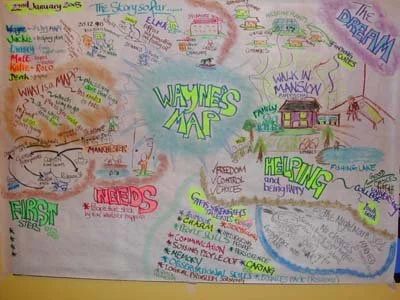
Approaches such as MAP and PATH [LINK] help teams think long-term, dream boldly, and plan concretely with the person at the centre. These tools allow families, professionals, and young people to imagine a positive future and identify the steps to get there.
One example is Wayne, a young man who remained in his local community because educationalists and social workers stood firm against pressures to send him to residential care. Wayne dreams of owning a mansion where young people in care can stay and be well supported — a powerful example of how long-term planning honours individual dreams, not system limitations.
You can explore resources to develop your MAP and PATH facilitation skills, including full MAP examples created with diverse teams around young people who have spent years in public care. [LINK to ‘all my life’s circles’ book]
[LINK TO - Evaluation of use of PATH by Educational Psychologists – Margo Bristow’s Doctorate 2014 (blog)]
Evidence from PATH Research
Dr. Margo Bristow’s thesis [LINK], An exploration of the use of PATH by Educational Psychologists with vulnerable and challenging pupils, highlights the impact of long-term planning:
PATH increased pupils’ confidence and motivation to achieve their goals.
Young people and parents felt like equal partners, with their voices genuinely heard.
Parent–pupil and parent–school relationships improved.
Skilled facilitators made a significant difference to outcomes.
Some participants felt anxious beforehand, showing the need for better preparation.
Pre-PATH planning and post-PATH review were identified as essential areas for improvement.
These findings reinforce the value of thoughtful, long-range, relationship-centred processes.
Thinking Beyond Today
We routinely ask typical children: “What do you want to be when you grow up?”
Yet we rarely ask this of children with complex needs. Families themselves often feel unable to think far ahead, saying, “We can’t look beyond today.”
As a result, major decisions — such as placing a child in a special school or unit — are sometimes made without considering their long-term consequences. This can increase the risk of future isolation, vulnerability, and disconnection from community life.
But our society does not have “special shops” or “special bus stops.” Children with complex needs grow into adults who deserve full participation in ordinary community life. Long-term thinking helps make that possible.
Learning from Hostage Negotiators
This is Emma Van Der Clift’s MA thesis and it’s all about moving from behavioural to person centred approaches to behaviour management and what teachers can learn from Hostage Negotiators!
Emma is Norman Kunc’s wife and a long time leader in the North American inclusion movement
The Fourth Key: Locating Gifts and Capacity
‘Possibilities of goodness’
Locating gifts, talents and capacity in children and adults we work with is a much more radical idea than it might seem. Check out the Now Discover Your Strengths book available from Amazon.
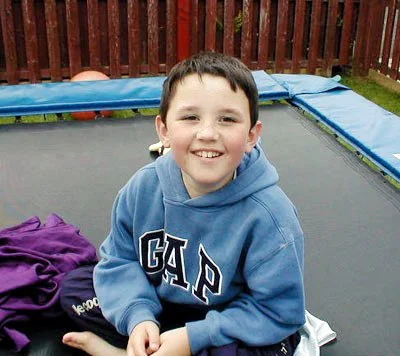
All About me - This excellent booklet has been written by a young person from Scotland with help from those who know him best.
Essential lifestyle planning underpins many of the questions.This work shows how important gifts are when planning for pupil’s education. Person centred booklets like these are appearing all around the UK. They are getting names like Personal Portfolio or Passport. Develop your own for a child you know today!!
Another excellent example has been created by Babu and his family: Babu’s one-page profile.
The Fifth Key: Intentional Building of Relationships
We all need to accommodate each other and find new ways of repairing the damage we can do to each other in our school, family and community settings.
Circle of Friends is of course a key tool for entering the messy world of relationships and can make an amazing difference to individuals with the most challenging behaviour and hard to reach emotional needs.
What about physical contact and touch in relationships when a child really needs this?
Check out this progressive school policy
Roots of Empathy is a powerful idea whose time has come. An evidence-based classroom program, its mission is to build caring, peaceful, and civil societies – child by child – through the development of empathy in children
The Sixth Key: It’s All About Teams
Circles of Adults [LINK]
This is a rich approach to encouraging teachers and other practitioners to mutually support each other with in depth problem solving and emotional insights.It works even better with graphic facilitation and synthesis as we have been discovering. Speak to us for details.We are currently rewriting this paper…feel free to feedback to us.We are providing training to model this approach.
This work links well to that of educational therapy. Educational Therapy is a way of working with children who have learning difficulties. It combines teaching with therapeutic exploration of the emotional factors, which may impede their learning.
Children in school can experience difficulties, which may prevent them from accessing the curriculum and managing in class. A better understanding of the complex issues underlying these problems helps teachers to find new ways of thinking about children and strategies for helping them both therapeutically and by preventing difficulties from developing.
Do have a look – it’s very clearly written and incisive on the theme of how schools’ default approaches to conflict – detentions, exclusions etc are the opposite of building a sense of belonging and inclusion – both aims which likely feature in most school’s mission statements. We’ve been saying this sort of thing for years but the research back up Emma provides is outstanding.
Values of Behaviour Specialists
Check out this paper by John O’Brien and David Pitonyak and visit his website, Dimagine, for more details.
David is the most respected writer/thinker on issues of challenging behaviour and disability in North America, among inclusionists at least, but not widely known of in the UK.
The paper has an interesting approach to trying to link a ‘behaviour specialist’s’ underlying values and beliefs to their practice in the field – we think it could be an real learning activity to do something similar for an EP or other Support Service. At the very least it’s a good model of how to try and spell out what your values mean in practice.
Restorative Approaches
Do something. In the face of hatred, apathy will be interpreted as acceptance — by the haters, the public and, worse, the victim. Decency must be exercised, too. If it isn’t, hate invariably persists.
Restorative Justice is an essential ingredient for the inclusive school and education system. Howard Zehr is one of the pioneers of this Restorative process.
See Zehr discussing this on YouTube
You can also watch Desmond Tutu speaking about this.
Feedback from Restorative Practice Training
North East England
“I have just done a rough count of children who have been involved in Restorative Conferences since we completed our training with you and I am up to about 100 children. We have also had about 12 parents involved in conferences. We are using the language so much it is second nature and there have been many more children who have benefited from this I’m sure! We are really pleased with how it is going and just this week me and Jane Cunningham (Head Teacher) have held a couple of really successful conferences where the children have been so on board and positive at the end of the process it has confirmed to us that we are doing the right thing! We have had times when we doubt what we are doing because we are still struggling to get some staff on board but luckily we have been able to remind each other of our successes! We both agree that your training was very inspiring and would like to thank you for that! We will keep chipping away at everyone!’ Thanks again!”
– Alison Holmes, Relationship Manager, Seaview Primary
The Compass of Change
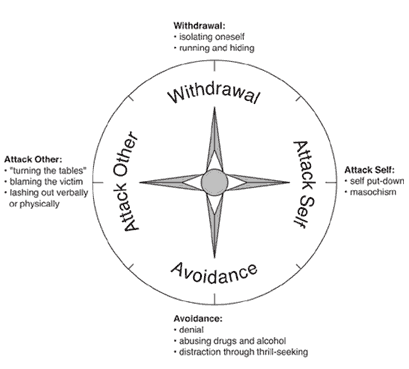
The Compass of Shame (adapted from Nathanson, 1992) describes four common ways people respond when they feel shame. Understanding these reactions helps us build empathy, especially with children and young people who display challenging behaviour.
The Four Shame Responses
1. Withdrawal
Pulling away from others, isolating, hiding, or avoiding interaction.
2. Attack Self
Self-criticism, self-blame, or internalising negative thoughts.
3. Avoidance
Denying problems, distracting with thrill-seeking, or using substances to escape feelings.
4. Attack Other
Lashing out verbally or physically, blaming others, or “turning the tables.”
Nathanson argues this response contributes significantly to rising levels of violence in modern society.
Do something. In the face of hatred, apathy will be interpreted as acceptance — by the haters, the public and, worse, the victim. Decency must be exercised, too. If it isn’t, hate invariably persists.
We have been supporting the development of Robin Tinker’s work in Nottingham focused on secondary schools. Check out the links on this national UK site. Transforming Conflict is an excellent site developing restorative justice still further.
Why This Matters
People with healthy self-esteem often recover from shame quickly, but everyone experiences these reactions to some degree.
Restorative practices provide a safe way to express difficult emotions, including shame, and gently move from negative feelings toward more positive connections. In restorative conferences, people routinely shift from hurt or anger through to understanding, relief, and even empathy.
We explore this process regularly in our training — it’s a powerful way to understand and support young people who struggle with emotional regulation.
Learn More
Read more about the Compass of Shame on the Real Justice website.
Watch this video on Shame and Guilt to deepen your understanding.
The Transforming Conflict site offers excellent further resources on restorative justice, including several national UK projects currently being evaluated.
Trust, Forgiveness & Restorative Approaches
True forgiveness takes work. In schools, it should be reflected in Relationship Policies rather than traditional “Behaviour Policies.” Restorative approaches place connection, accountability, and healing at the centre of school culture.
Seal Community
SEAL (Social and Emotional Aspects of Learning) is a UK initiative introduced to support the development of social and emotional skills in children aged 3-16. It focuses on enhancing self-awareness, empathy, emotional regulation, and social skills through a structured curriculum. SEAL equips students with skills to manage emotions, build relationships, and navigate school life effectively.
Key aspects of SEAL:
Curriculum-Based Learning: Provides structured lessons for various age groups, focusing on emotional skills.
Staff Training: Helps educators model and reinforce these skills within the school.
Parental Involvement: Offers resources to extend social and emotional learning into the home.
Benefits:
Improves mental well-being, behavior, and academic performance.
Promotes a cohesive school culture and reduces incidents like bullying.
SEAL’s YouTube Channel provides additional visual resources and practical ideas for integrating SEAL strategies effectively in schools and homes. Click here to access SEAL’s Youtube Channel.
Therapeutic Services Offer to tackle Mental Health challenge
We work with children or young people recovering from brain damage, accidents or longer term disability including those with challenging behaviour, or social and communication issues – read more here [LINK TO BLOG].
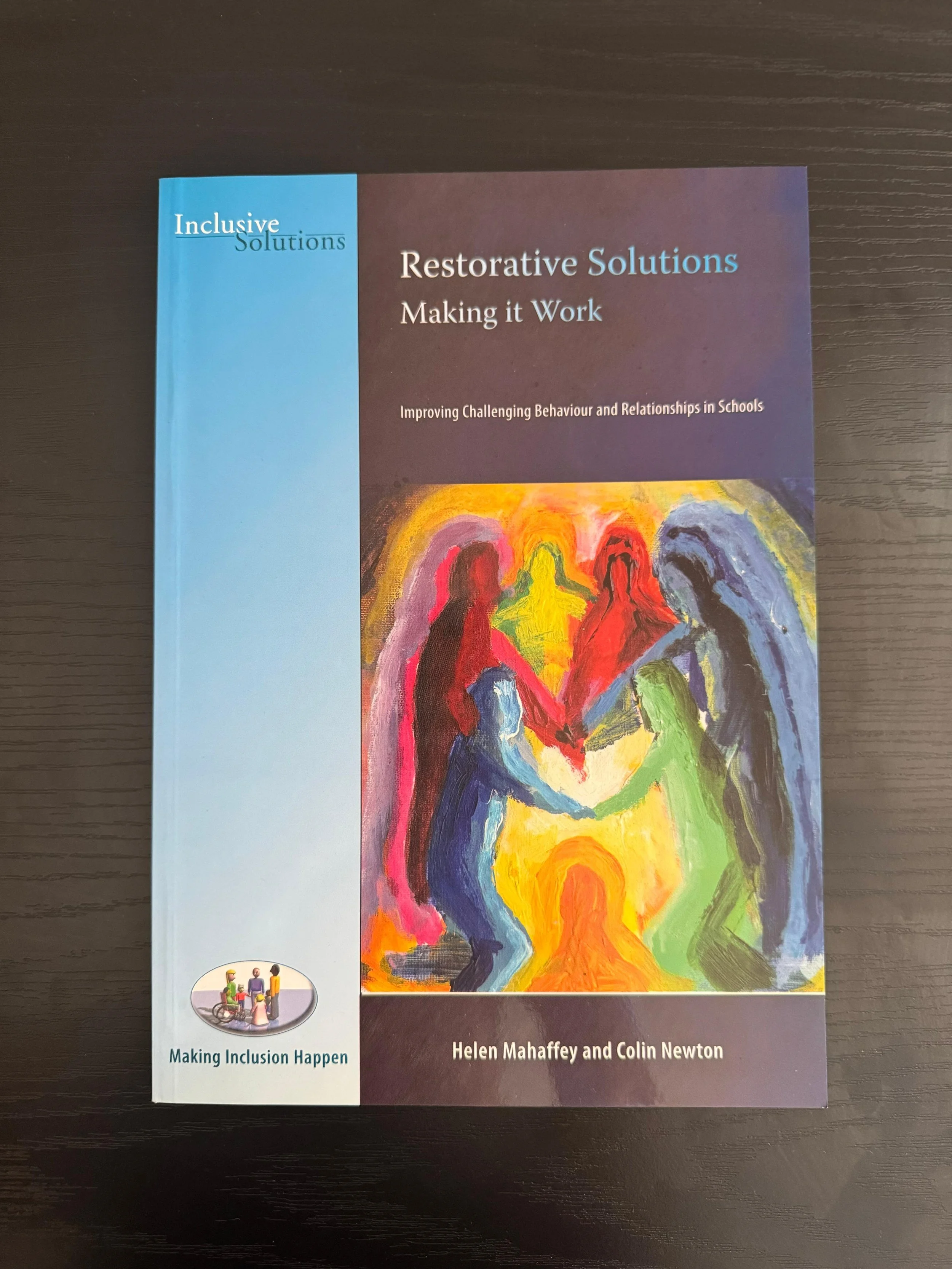
Restorative Solutions: Making it work
Colin Newton and Helen Mahaffey
This is a practical book about how to implement Restorative interventions and approaches in schools. The book gives guiding ideas, principle, theory and values as well as direct scripts for those involved in direct contact with pupils, staff and parents. Restorative Solutions are about inclusion, transforming relationships and radical ways of impacting upon conflict and rule breaking behaviour. All schools in the UK and Support Service staff will want a copy. Parents will also find it an extremely valuable resource for bringing up their own children peacefully.
Restorative Solutions
Restorative Justice as a process is a great approach to ‘making it right’ instead of simply punishing offenders. Find out more about Restorative Conferencing from some of the successful work carried out in Nottingham.
Undercover Teams
Undercover Teams (Bill Hubbard: New Zealand) are a low-intrusion restorative approach to bullying and are an adaptation of the influential and far-sighted work in the early 90’s of Barbara Maines and George Robinson of the UK. They labeled their support group approach to addressing school bullying as “No-Blame”. At the time and for years later, some people believed that this process was the single answer to school bullying that everyone had been looking for. Undercover Teams represent a unique tool that fits within the family of ‘restorative responses’. Undercover Teams are a ‘targeted approach to – repairing relationships.
Viewed using a restorative perspective, Undercover Teams (UTs) may not be regarded by some practitioners as ‘fully restorative’ because the victims of bullying and the offending students are not brought face-to-face as part of the process however this fact alone should not undermine the worth of UTs. Rather, UTs can represent a niche process for supporting young people who may be fearful at the prospect of participating in a restorative conference situation. For students who have been bullied for much or all of their school lives, this can often be the case.
Gentle Teaching
Some really interesting thoughts from Pouwel van de Siepkamp who has this website which echoes many of our views.
Six good reasons for avoiding punishment
Using punishment in order to control and change behaviors seems so normal in most of the cultures we know of. We don’t realize the many negative side effects of punishment. If we would, we would stop using punishment.
Traumatic imprints
Research has shown that a repetition of even minor negative experiences over a period of time may lead to traumatic imprints in the brains of a person and cause a post traumatic stress syndrome. So imagine you have a disability, and you keep doing something you can’t help doing, and your caregiver corrects you with an average of 3 times a day by saying STOP DOING THIS! 3 times a day = 21 times a week = 1092 times a year = 10.920 times in 10 ten years. We know people who lived like this for 20 – 30 years. They are traumatized by the words STOP DOING THIS. And most of us even don’t see these words as punishment, but merely as correction.
More negative energy
When you use punishment, by definition you are too late. The behavior already happened and for some reason you couldn’t prevent is. The person may have created negative energy by his behavior, but you add more negative energy by punishing. Besides that, you may perhaps teach the person what not to do by punishing afterwards, but you won’t teach him how to handle his stress in another way. You just leave him empty handed.
Inequality
By using punishment we put ourselves explicitly above the person. Not only because we have better insight in what is appropriate or not – which might be true – but because we think we have the right to judge over the person and do harm to him. We don’t have that right.
Creating fear
By definition punishment has the intention that you want to make the person afraid of what you might do when he doesn’t listen to you, or behaves the way you want him to. You teach him to turn away from you instead of the feeling of companionship.
Wrong role-modelYou also teach the person that it’s obviously ok to punish a person who is lower in rang than your are (according to your own opinion) when he does something you don’t like. You don’t only teach this to the person who is punished, but also to the others who witness this. They all might start doing the same we do.
Social exclusion / marginalization
By punishing a person in front of others (like in a classroom or group home), you show the others that this person is doing something bad. This can cause others to punish him also when they see him doing it again. Or they come and tell you, hoping that you will punish the ‘bad guy’. This starts a process of marginalization and social exclusion.
So think it over and decide for yourself whether or not you should punish a person.
Restorative Links and Resources
Download the ‘Short Restorative Conference Process’ sample of the book
This is an organisation working to promote conflict resolution and restorative justice as alternatives to the endless cycles of conflict, violence and crime that are the hallmarks of our time.
Fight Hate and promote Tolerance
This is a great place for teaching tolerance resources and ideas.
What is really important when meeting emotional needs?
In Punished by Rewards Alfie Kohn challenges us to get back to what really counts and not be so preoccupied with rewards and punishments!
TaMHS Strategy
Targeted Mental Health in Schools (TaMHS) is a three-year pathfinder programme aimed at supporting the development of innovative models of therapeutic and holistic mental health support in schools for children and young people aged five to 13 at risk of, and/or experiencing, mental health problems; and their families.
Inclusive Solutions is providing training input around the UK as part of this strategy. Circle of Adults is being embraced in a number of LAs as a great process for shared problem solving and in depth reflection on emotional issues and behaviour.
Contact us to talk more about this.
Emotional Needs of Boys
This is a theme we provide considerable training around because of the over representation of boys in special schools and within exclusion statistics, and as they grow up they continue to be over represented among those with mental health problems, in prison and so on.
In successful secondary schools where boys make good progress there is a ‘non macho’ culture, where they can feel valued by an ethos that celebrates diverse achievements, where short term tasks are set and work is marked promptly with detailed feedback. These schools have plenty of extra curricular activities, teaching is at a ‘sprightly pace’ and there is good use of computers and interactive learning value is placed on the diversity of learning styles and all experience a true sense of belonging!
Boyz 2 Men
Check out this wonderful piece of work in an inner city primary school. This OFSTED praised work shows the powerful use of drama, art and music in the meeting of emotional needs.
Creative Partnerships works to give school children in areas throughout England the opportunity to develop their potential, their ambition, their creativity and imagination through sustainable partnerships with creative and cultural organisations, businesses and individuals.
Emotional Intelligence, emotional competence and emotional literacy are so important to develop and teach especially among our boys and young men. The dark side of emotional intelligence will be very familiar to many visitors to this site and yet is seldom as well explored.
Gentle Teaching may offer us a new way of exploring relationships with those who are hard to reach…Gentle Teaching is a non violent approach for helping people with special needs and sometimes challenging behaviours that focuses on four primary goals of care-giving:
teaching the person to feel safe with us
teaching the person to feel engaged with us
teaching the person to feel unconditionally loved by us
teaching the person to feel loving towards us
Gentle Teaching is a strategy based on a Psychology of Interdependence that sees all change as being mutual and bringing about a feeling of companionship and community- symbols of justice and non-violence
PRUs Are they good or bad? Check out the arguments in this paper by Colin Newton and Derek WIlson which draws upon DfES policies as well as research.