
Autism
Navigate this page
Contact us
Movement Differences
Understanding movement differences in a non-medical way can be key to understanding and including people who otherwise may seem very challenging and difficult. All Autistic people, and also those with labels such as Tourettes can have movement differences creating difficulties in:
Stopping
Starting
Switching
Combining
Continuing
Executing complex movements
All of us in the world moving around in human bodies experience difficulties in one or more of these areas. But some people have much greater issues – the volume has been turned up and the difficulty is much greater.
Understanding Movement Differences - Online Course
Self-paced learning
Learn a great tool for inclusion
Learn how to create a shared vision of a positive future
Hosted on Teachable
Resources and Studies relating to Movement Differences:
Rethinking autism: implications of sensory and movement differences for understanding and support
Anne Donnellan & Martha Leary
-
This paper highlights how sensory and movement differences in autistic individuals play a crucial role in shaping their behavior and communication, challenging traditional views that only focus on social and communication deficits. Autism has traditionally been understood as a set of deficits in social interaction, communication, and imaginative play. The paper emphasizes the neurological differences in sensory processing and movement that impact an autistic person’s behavior and ability to communicate. These sensory and motor differences often go unnoticed by outsiders but can significantly affect how an individual expresses intention and meaning.
This perspective provides a deeper understanding of autism, emphasizing the need for support strategies that address sensory and movement challenges, rather than focusing solely on social skills. This can lead to more inclusive and effective support systems for autistic individuals.
In this context ‘echolalia’ is simply a label for a verbal behaviour and this way of using speech, by professional agreement, is seen as a defining ‘symptom’ of ASD. It isn’t an attempt to explain why someone should echo speech in these distinctive ways. But sooner or later we’ll want to ask ‘Why?’ – Why do people repeat things they’ve heard? And I mean any of us, not just individuals with an ASD label
Framework for Support
Donnellan and Leary have a great credo for supporting people with movement differences:
You’re OK Each person is OK just the way they are. Like all of us, people may want to change things in their lives, learn new skills, fit in, etc. Support includes recognition of a person’s current attempts to participate.
Let’s Collaborate Effective support includes the person in choosing goals for change and preferences for learning.
Support to Organize Focuses on working out the right prompts – respectful accommodations that people can use to get around difficulties.
Giovanni Nicoli et. al.
This article explores whether individuals with developmental disabilities, including autism, actively contribute to the communication process during a technique called Facilitated Communication (FC).
-
This article helps schools and families understand that the tools we use to help autistic individuals need to be reliable and genuinely reflect the person’s own thoughts. It emphasises the importance of choosing communication methods that empower the individual, especially in educational settings where self-expression and independence are critical.
What is Facilitated Communication?
Facilitated Communication (FC) is a method where a helper supports the hand or arm of a person with a disability while they type or point to letters or symbols. It’s used to help people who have trouble speaking express themselves.
This article highlights the importance of developing reliable, supportive communication tools for autistic individuals so they can fully engage in their education and daily life.
-
It discusses both the strengths and limitations of this method and investigates how it can be tested and improved. The article suggests that, with the right support, your child can express thoughts, feelings, and ideas that they might otherwise struggle to share.
The article shows that FC can be an empowering tool for non-verbal individuals, giving them a voice in their learning and social interactions. It emphasizes the need for inclusive education systems that provide multiple ways for children with disabilities to communicate.
The article reiterates the importance of educators and parents remaining open to alternative communication methods, allowing children to thrive in classrooms where their individual needs are met and respected.
Giovanni Nicoli et. al
The study shows that people with developmental disabilities have unique ways of communicating, and FC can be a tool that highlights their individuality, rather than suppressing it.
-
This means that even though they receive physical support, individuals show distinct personal styles in their writing, such as vocabulary choices, sentence structures, and the way they express ideas.
Why Is This Important for Inclusive Education?
For parents and educators, this means it’s important to recognize and respect the unique way each child communicates, whether verbally or through assisted methods like FC. It allows children with developmental disabilities to fully participate in educational and social activities.
By understanding how individuals contribute to their own communication, parents and teachers can foster a more inclusive and supportive educational environment that respects the autonomy and individuality of every child. This research highlights the importance of creating spaces where all students, regardless of their communication methods, can be heard.
Giulia Pavon
The article looks into how Faciliatition Communication (FC) works and its potential to assist people with severe communication difficulties.
-
The study looks at how being physically guided (such as a facilitator helping to guide their hand) can reduce the difficulty of focusing on multiple tasks at once—like typing and thinking about what to say—helping individuals communicate more freely.
The article provides evidence that touch-assisted communication can lessen the cognitive load, helping children focus more on what they want to express rather than the mechanics of typing. This can be very beneficial in a classroom setting.
The Reason I Jump
Read Derek Wilson’s book review of this fascinating account of movement challenges – direct from personal experience. Featured on Radio 4 Book of the Week.
Giovanni Nicoli et al.
This article investigates how gentle physical support during typing can help reduce the mental strain on individuals with developmental disabilities, making it easier for them to communicate their thoughts and feelings.
Sensory Super Sensitivities
Understanding Super Sensory Sensitivities in Autism – online course
Self-paced learning
Learn a great tool for inclusion
Learn how to create a shared vision of a positive future
Hosted on Teachable
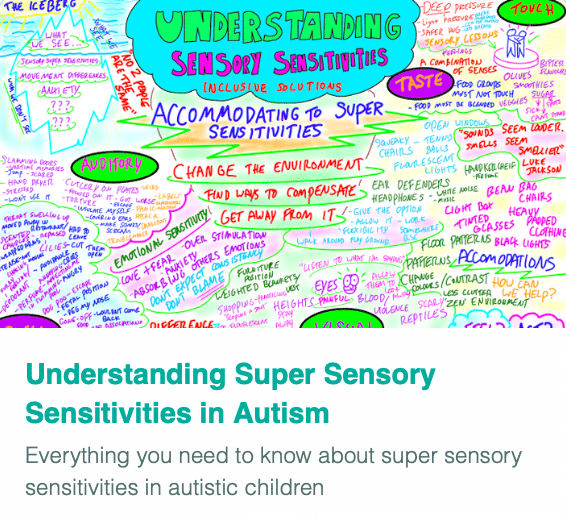
Sometimes, an autistic child may behave in ways that are hard to understand, often linked to super sensory sensitivities. Here are some key points to consider:
Sensory Overload
-
Individuals who struggle with everyday sensory information may experience overload, leading to stress, anxiety, and even physical pain. This can result in:
Withdrawal
Shutdown
Meltdowns
Understanding Sensory Systems:
-
It’s essential to recognize the difference between an overwhelmed sensory system and a dysfunctional one.
Autistic sensory systems are not dysfunctional; they operate at a higher level, similar to fictional superheroes.
This heightened response requires careful consideration when developing treatment modalities, as increased sensory input can lead to higher anxiety levels.
Insights from Gail Gillingham:
-
Gail Gillingham, a respected author on autism, highlights that individuals on the autism spectrum often feel overwhelmed by sensory stimulation:
Touch can feel like a tidal wave.
Sounds may be too loud or distorted.
Visual information can appear fragmented.
Odors can be sickening, and tastes unbearable.
Research from the University of Georgia (Casanova et al.) indicates that individuals with autism have a different brain structure—more mini columns that are smaller than those of typical individuals. This heightened structure results in receiving sensory information at an overwhelming level.
Impacts of Shutdown:
-
When sensory input reaches a dangerous level, the body may go into shutdown mode, which can feel safe but is dangerous because it limits awareness of basic needs like hunger, thirst, and pain.
Many myths about autism, such as the supposed lack of response to pain, actually stem from this shutdown state.
Some treatments inadvertently push individuals into shutdown, leading to severe consequences, including:
Constipation from not feeling the urge to go to the bathroom.
Serious health risks from going without food or drink.
Physical harm from not sensing injuries.
Key Recommendations:
It’s vital to understand and respect shutdown to keep autistic individuals safe.
For further resources, consider Paula Kluth’s book and website, which offer many ideas for accommodating sensory needs.
For more information on understanding and helping with sensory sensitivities, visit the National Autistic Society’s Autism and sensory processing page.
Anxiety
Think of anxiety like a jug filling with stress. When too much builds up — too fast or for too long — it overflows. For autistic individuals, this “overflow” can look like shutdowns, meltdowns, or a sudden drop in communication.
Many autistic people use repetitive or rhythmic behaviours to cope. These aren’t quirks — they help regulate the body, release calming endorphins, and manage overwhelming sensory input.

What Can Cause Anxiety?
Environmental overload: bright lights, noise, crowded spaces, or intense social demands.
Internal overload: strong emotions, hunger, tiredness, or memories of past negative experiences.
Boredom: an active mind without enough stimulation can also create discomfort.
Why These Behaviours Matter
Every behaviour is a response to something happening right now. Autistic people often experience the world very differently from neurotypical individuals, and their reactions are genuine attempts to cope.
By noticing when these protective behaviours appear, we gain insight into:
what triggers anxiety,
how full the “stress jug” is,
and what support is needed in that moment.
Supporting Autistic Individuals
Understanding these patterns helps families, caregivers and educators create environments that feel safer and more manageable. Small changes to sensory input, routines, or communication can make a significant difference in reducing anxiety and supporting wellbeing.
Anxiety/Agitation Levels
1. Low Agitation:
Individuals are able to concentrate on their activities for long periods of time and follow directions calmly.
They may speak in a low tone, look directly at others, and respond promptly.
Solution: No intervention is needed. This is when individuals with autism are at their best, capable of learning and engaging effectively.
2. Buildup (Rising Agitation):
Interactions and directions take more effort for individuals to respond to; they may need repeated prompts or tactile support.
They may solve problems independently, seek comforting physical contact, or use a whiny voice to express needs.
Solution: Acknowledge their current feelings, reinforce their communication efforts, and reduce environmental stimulation whenever possible.
3. urvival Mode (Medium Agitation):
Individuals exhibit very low responsiveness and may display loud, high-pitched voices and demanding behaviors.
They may struggle to remain still and reach out for comfort from others, showing awkward body movements.
Solution: Redirect their focus and maintain engagement through alternative activities without increasing their agitation.
4. Survival Mode (High Agitation):
At this stage, individuals may need to exert control forcefully, charge through spaces, or display aggressive behaviors such as hitting or screaming.
Communication may decrease significantly, and there is a high risk of a meltdown.
Solution: Allow individuals the time and space to calm down; teaching anything during this state is likely futile.
5. Shutdown:
In this state, individuals appear calm but may not engage with their surroundings, seeming to “zone out.”
Solution: Gently bring them back to the present using sensory inputs that they find comforting, like tactile or auditory stimuli.
6. Meltdown:
Meltdowns can look like severe tantrums but are panic attacks that result in a loss of control over actions and may include aggression.
Solution: Facilitate a quiet space where they can withdraw and use their personal calming techniques. Any further input could exacerbate their distress.
Understanding Reactions and Anxiety
Anxiety can come from both positive and negative experiences, and responses often change as a person grows. It’s important not to take an autistic individual’s behaviour personally — their reactions are usually about sensory overload or anxiety, not the people around them.
By recognising these patterns, caregivers and educators can create environments that feel safer, calmer, and more supportive, helping autistic individuals navigate their day with greater ease. Read more here…
Our Expertise
We specialise in:
Autism in mainstream schools
Inclusion for students with disabilities
Educational psychology
Autism-focused support and training
Community building and inclusive practice
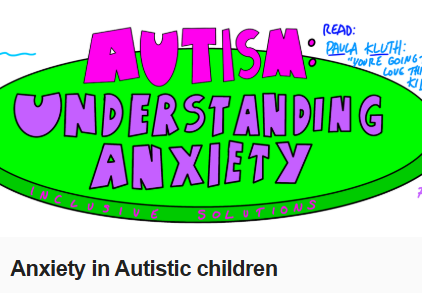
Anxiety in Autistic Children
Self-paced learning
Learn a great tool for inclusion
Learn how to create a shared vision of a positive future
Hosted on Teachable
Amali’s Poem
“Written by me, her mum, as I watched my daughter blossom in a world that no longer defines her because of her autism, but allows her to embrace her difference in a rainbow of possibility.”
Yvonne Ugarte
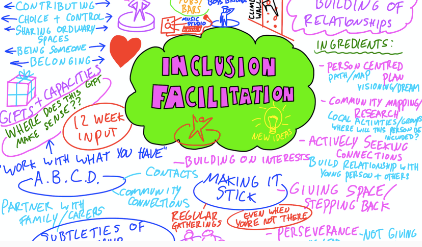
Inclusion Facilitation
Self-paced learning
Learn a great tool for inclusion
Learn how to create a shared vision of a positive future
Hosted on Teachable
Matching Autistic People to Real Jobs
Making up the 1%
The German software company SAP aims to have 1% of its workforce comprise of Autistic people within five years – adding up to about 650 people. The multinational works with Specialisterne to employ Autistic people as software testers, programmers and in data quality assurance. The project was piloted in Germany, India and Ireland and later spread to North America.
Read this excellent article in the Guardian. Making up the 1%.
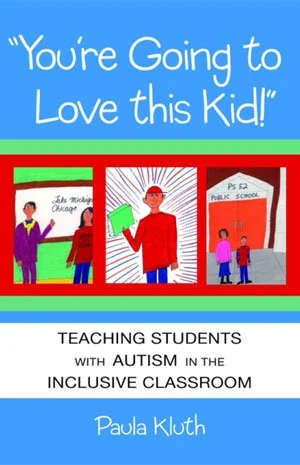
Educators will find some excellent sections in this book by Paula Kluth on practical ways to tackle movement differences.
Paula Kluth’s web site is dedicated to promoting inclusive schooling and exploring positive ways of supporting Autistic students and other disabled students. Most of her work involves collaborating with schools to create environments, lessons, and experiences that are inclusive, respectful, and accessible for all learners.
-
My name is Amali, I’m angel or pest
The Asperger chick in the Autism nest
I’m bold and I’m stubborn, I’ll always ask why
But I don’t know what tears are
If I see mummy cry
I struggle to listen or sit still in class
I need constant support just to keep me on task
My few friends lose patience, unsure what to say
My actions are clumsy
I don’t know how to play
I have no sense of danger, no signals, no codes
I chat to all strangers and dawdle on roads
I laugh loud at nothing, I fidget and spill
Obsessed with my laptops, I rarely stand still
Some kids call me stupid and try make me mad
They can’t even tell if I’m happy or sad!
I’m not invited to parties, there’s no girlie chats
They don’t share my fixation with animal facts
I’m over affectionate, don’t quite know why
Cos I don’t know what love is
And so seldom cry
Both bossy and anxious, I struggle with games
So I sit by myself but they still call me names
Yet I remember in detail each journey I make
The hum of the strip light that made my ears ache
That man outside Tescos..
The dog with one eye
The time of the train..
And when dad chased that fly…
I know I am different…
I know this is true
Cos I don’t see the world through the same eyes as you
I’m blessed with Asperger –
It’s the essence of me
A light and shade world where I’m happy to be
As fierce as a lion, as meek as a lamb
I am Amali.
Amali I am.
Great Autism Links
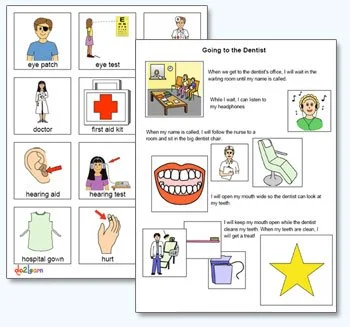
Social Stories were developed by Carol Gray, President of The Gray Center. A Social Story™ describes a situation, skill, or concept in terms of relevant social cues, perspectives, and common responses in a specifically defined style and format.
The goal of a Social Story™ is to share accurate social information in a patient and reassuring manner that is easily understood by its audience. Half of all Social Stories™ developed should affirm something that an individual does well. Although the goal of a Story™ should never be to change the individual’s behavior, that individual’s improved understanding of events and expectations may lead to more effective responses.
Find out more on the Gray Center Website
Visit the Disability Studies Quarterly Website and take a look at Volume 30, No 1, this issue is about autism and full of some great work by self advocates, including Amanda Baggs and Tito.
Paula Kluth’s web site is dedicated to promoting inclusive schooling and exploring positive ways of supporting Autistic students and other disabled students. Most of her work involves collaborating with schools to create environments, lessons, and experiences that are inclusive, respectful, and accessible for all learners.


Autism National Committee (AUTCOM) This is the only autism advocacy organization dedicated to “Social Justice for All Citizens with Autism” through a shared vision and a commitment to positive approaches. This organization was founded in 1990 to protect and advance the human rights and civil rights of all persons with autism, Pervasive Developmental Disorder, and related differences of communication and behaviour. In the face of social policies of devaluation, which are expressed in the practices of segregation, medicalisation, and aversive conditioning, they assert that all individuals are created equal and endowed with certain inalienable rights, and that among these are life, liberty, and the pursuit of happiness.

Sleep Help Resources for Autistic people
Weighted Journal decided to create this resource to highlight the most common sleep issues among children and adults with ASD. You will see how autism spectrum disorder might affect one’s sleep, what are the most prominent treatment options, the “do’s” and the “don’ts” as well as tips and other useful resources to tackle sleep issues when diagnosed with ASD.
Useful Links & Resources
Neurodiversity.com
A comprehensive collection of autism-related links, articles and resources — a true labour of love and an excellent starting point for deeper learning.
Finding Mike – Science Fair Story
A heartwarming article about a young autistic boy who won 4th place at a state science fair.
The Atlantic – Autism’s First Child
A powerful read about Donald Gray Triplett, the first person diagnosed with autism, and what his long and happy life teaches us about growing up and ageing on the spectrum.
More reading on Donald Gray Triplett (the first boy diagnosed as autistic)
Thandi explores Act Normal, The essential need to belong and be different at the same time; a personal account on common views on “normality”and “disability”.
Training
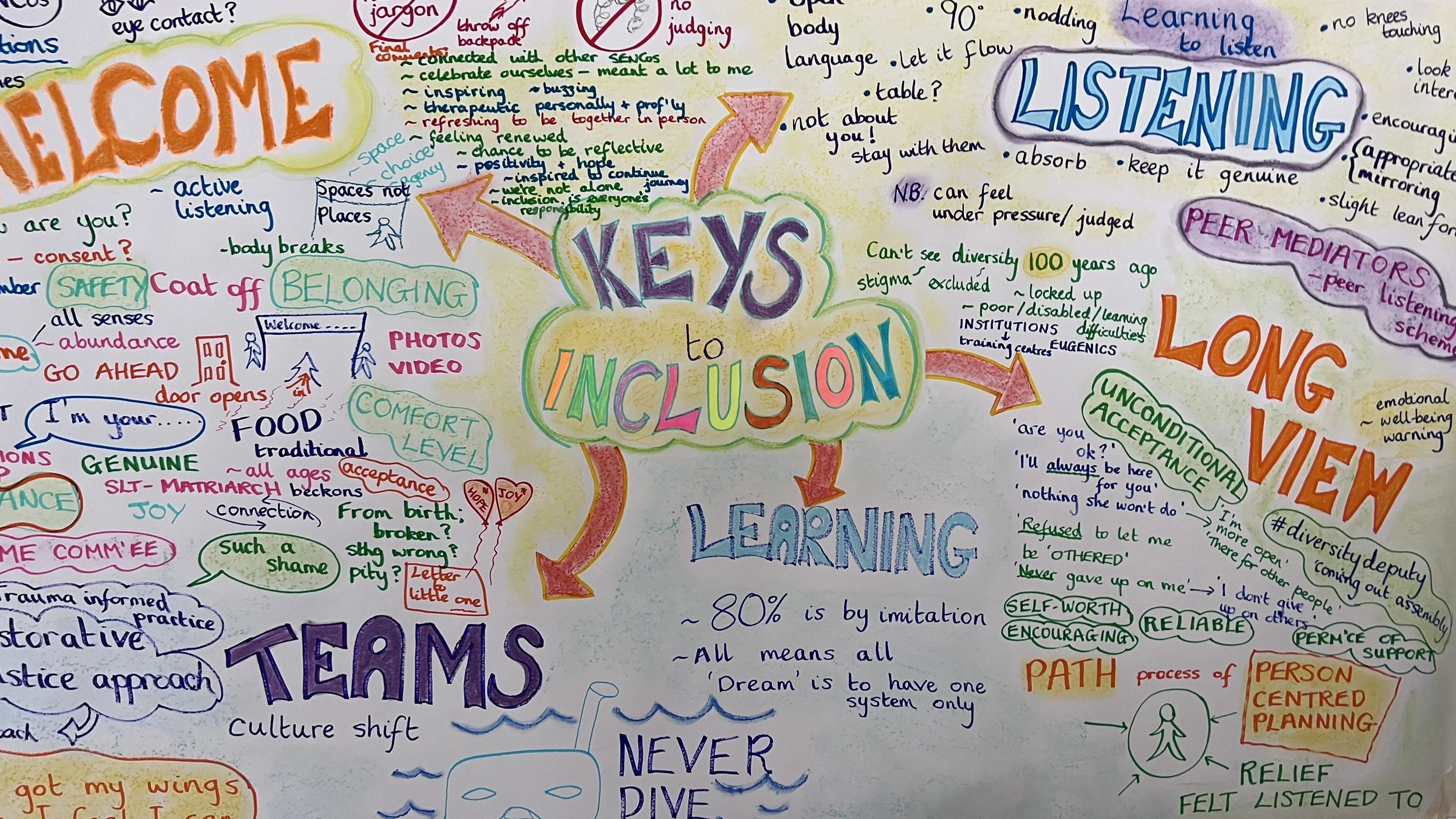
Our well received – non medical model – training days on understanding and including children or adults who are Autistic, explore movement differences, sensory sensitivities and anxiety. We also explore the role of other children and adults in creating circles of friends or support and the need we all share for relationships.
Alternatively we can create a training workshop just for you or a personal session for you or your family to strengthen your understanding of these differences and how to respond to them.
Contact us to discuss your training ideas or check out our full training list.

Revision Ideas
For Parents and Teachers of Autistic Young People
Sleep difficulties are common for many autistic children and adults, including those who also have ADHD. Poor sleep can increase daytime challenges, but good routines and the right support can make a big difference.
Autistic children often need extra help to unwind, feel calm and settle to sleep. Understanding their sensory profile, environment and bedtime triggers can help parents and teachers support healthier sleep habits.
Transition Team MAP process to support move to Secondary for Autistic Year 6 child | MAP Feedback