
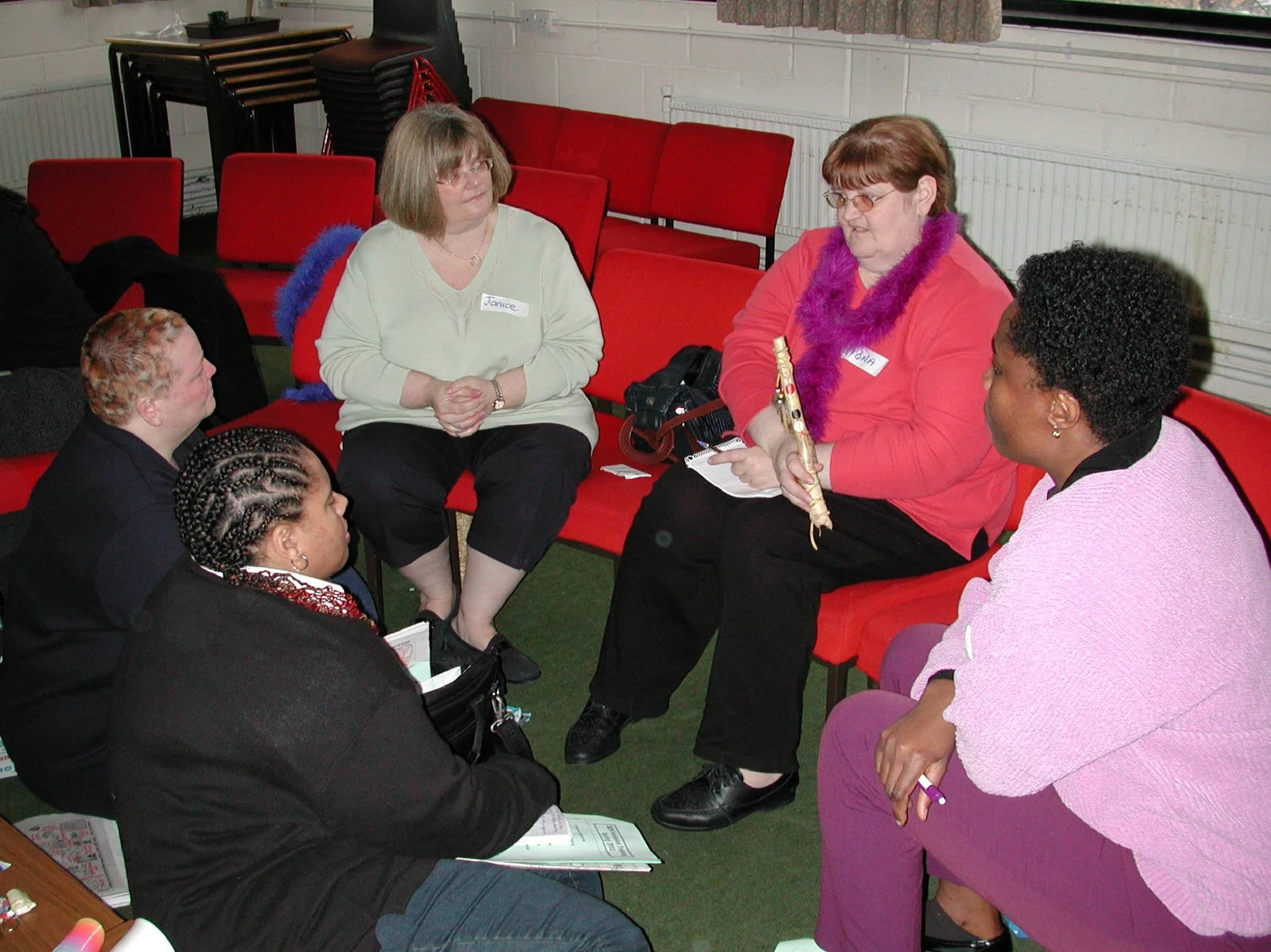
Description
To facilitate a family, in thinking together around a given challenge or issue, or to plan their future together in a respectful way – here is an opportunity to experience for real the person centred, futures planning tool – MAP (Pearpoint, Forest et. al. 1989).
This is more learning a process than training.
Best delivered over 2 days participants are guided though the background values to person centred planning and coached in the skills needed to use the MAP process with families.
This person centred planning tool uses both process and graphic facilitation to help any family grouping or individual family member develop a shared vision and then to make a start on working out what they will need to do together to move towards that vision.
MAPS are particularly great for threshold moments.
Is your family stuck?
Want to move on, haunted by the past cannot get any useful dialogue about the future?
Facing a challenging transition?
Bored with typical reviews, transition planning, TAC, TAF or review meetings?
Want to find a way of making meetings and planning feel more real and engaging?
Need an approach, which engages young people respectfully together with his or her family and friends?
Want the ultimate visual record of the process of a meeting, which will help everyone, keep track?
Want to problem solve and plan for the future of a small or large family?
You need a MAP!
Learning Objectives
To learn how to create a shared vision
To learn to talk through the story so far and reflect upon it
To be able to facilitate the naming of the worst nightmares that will block progress
To strengthen the family by focussing on gifts and capacity
To learn how to help a family detail its own needs
To lead on the development of a clear Action Plan
To learn how to create a visual graphic record of the whole event
Who Is It For?
Multi Agency Teams
Social workers
CAMHS teams
Year Managers
Primary and secondary staff teams
Early Years and School based Practitioners
Heads and Deputies
SENCOs
Advanced Skills Teachers
Primary and secondary teachers
Local Authority Support Services
Person Centred Planning Facilitators
Course Content
The MAP process has 6 Steps:
The story so far.
The family is required to think back over the years to describe their collective experience of changes and events over time within their settings. Stories and events are recorded on the graphic.
Building Shared Dreams.
The group thinks together about what they would love to see happening for the children, the family – if they could have it all. If there were no constraints on time, money, resources, people or anything else what do they see happening in their imaginations? The various ideas that the group comes up with are then recorded in key words, images and colours on the MAP graphic. The purpose of this Step is to give the group a sense of direction, their North Star, an image of the place they want to work towards.
Nightmare
In this Step, the group imagines the worst scenarios for the family. What is the opposite of their dreams? How bad could it get? This is a shorter but powerful process that can give some groups more energy than dreaming together.
Gifts and Capacity.
In this Step the group is asked to take explicit stock of the family’s capacities and what they already have going for them as they begin working towards the vision. This is a strong reminder for any group of the wealth of knowledge and experience that is already and always in the room.
What will it take?
In this Step the family is invited to begin to name some of the needs they will have if they are to move forward towards the dream and away from the nightmare.
Actions
This is the final Step in the MAP and calls for individuals within the group/family to name a range of very specific actions (however small) that they will take within a definite time scale. This is not a time for declaring good intentions or suggesting good ideas for someone else to do. The purpose of this Step is to end the MAP process with a range of clearly understood actions that carry this planning process forward into the real world.